

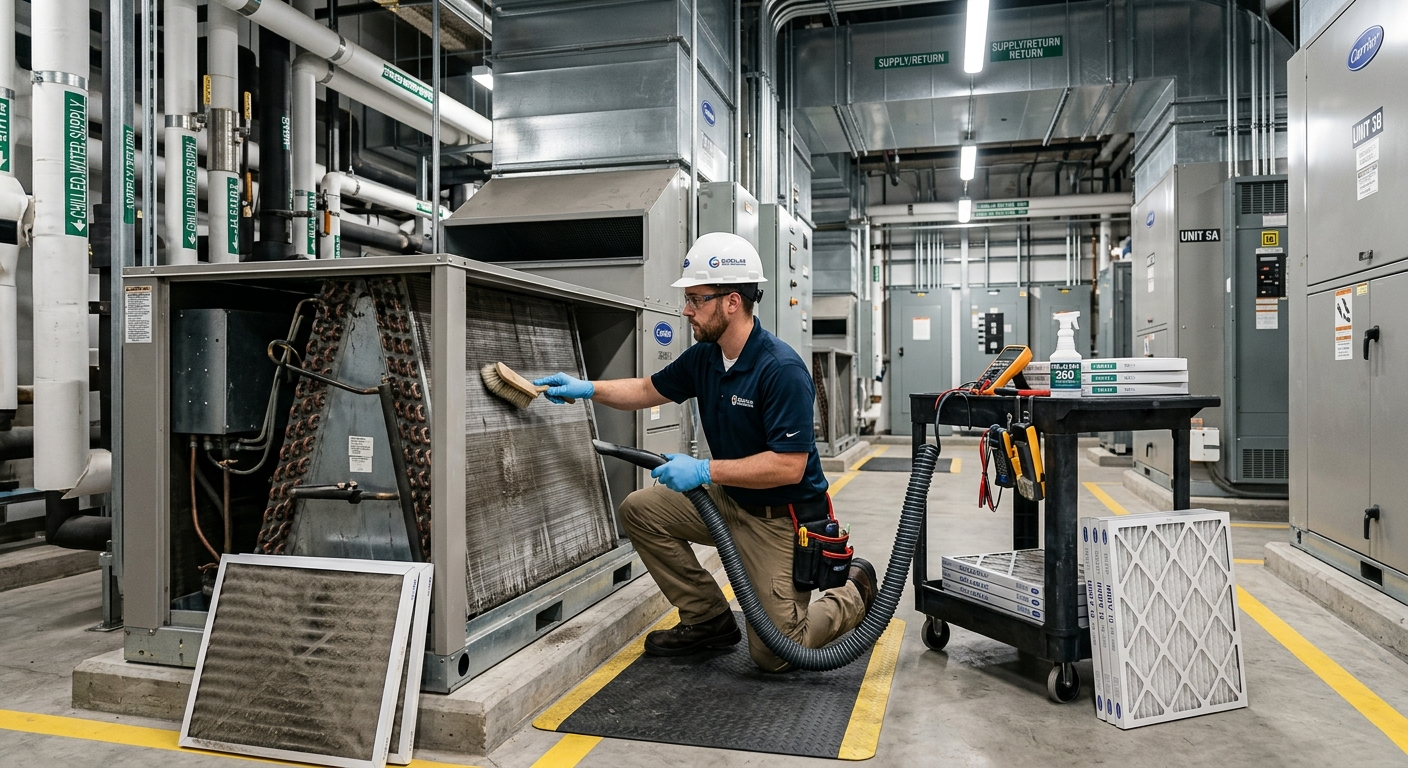
Heating, Ventilation, and Air Conditioning (HVAC) systems are essential for maintaining indoor comfort in residential, commercial, and industrial buildings. Whether it is a home, office, hotel, or warehouse, an HVAC system plays a critical role in regulating temperature, air quality, and overall environmental comfort.
However, like any mechanical system, HVAC units require regular maintenance to perform efficiently and reliably. Poor maintenance not only reduces system performance but also increases energy consumption, repair costs, and the risk of unexpected breakdowns.
In this guide, we will cover essential HVAC maintenance tips that help extend system lifespan, improve efficiency, and ensure safe operation throughout the year.
1. Regular Air Filter Cleaning and Replacement
One of the most important and simplest maintenance tasks is keeping air filters clean.
Dirty filters restrict airflow, forcing the system to work harder, which leads to:
- Higher electricity bills
- Reduced cooling or heating efficiency
- Poor indoor air quality
- Increased system wear and tear
Recommended Practice:
- Inspect filters every 30–60 days
- Replace or clean filters every 1–3 months depending on usage
- Use high-quality filters suitable for your system type
Regular filter maintenance ensures better airflow and healthier indoor air quality.
2. Clean Indoor and Outdoor Units
Dust, dirt, and debris can accumulate in both indoor and outdoor HVAC units over time.
Indoor Unit Cleaning Includes:
- Evaporator coil cleaning
- Air vent and grill cleaning
- Drain pan inspection
Outdoor Unit Cleaning Includes:
- Removing leaves, dust, and debris
- Cleaning condenser coils
- Ensuring proper airflow around the unit
Blocked or dirty units significantly reduce cooling efficiency and increase energy consumption.
3. Check Refrigerant Levels Regularly
Refrigerant is the key component responsible for cooling performance. Low refrigerant levels can cause:
- Weak cooling output
- Ice formation on coils
- Compressor damage
- System overheating
Important Note:
If refrigerant is low, it usually indicates a leak. In such cases, professional inspection and leak detection are required rather than simple refilling.
4. Inspect Electrical Components
HVAC systems rely heavily on electrical components such as:
- Capacitors
- Contactors
- Wiring connections
- Circuit boards
Loose or damaged electrical connections can lead to system failure or safety hazards.
Maintenance Tip:
A qualified technician should inspect electrical systems at least once a year to ensure safe operation.
5. Ensure Proper Airflow and Ventilation
Blocked vents or poor airflow distribution can reduce system efficiency and comfort levels.
Best Practices:
- Keep vents and registers open and unblocked
- Avoid placing furniture in front of airflow outlets
- Ensure ducts are properly sealed and insulated
Balanced airflow improves system performance and reduces energy usage.
6. Schedule Professional HVAC Inspection
While basic maintenance can be done regularly, professional inspection is essential for long-term system health.
A professional HVAC inspection includes:
- System performance testing
- Airflow measurement
- Energy efficiency evaluation
- Leak detection
- Safety checks
Recommended Frequency:
At least once or twice a year depending on usage and environment.
7. Monitor Energy Consumption
An unexpected increase in electricity bills can indicate HVAC inefficiency.
Monitoring energy usage helps identify:
- Early system faults
- Reduced efficiency
- Maintenance needs
Modern HVAC systems often include monitoring tools for better energy management.
8. Use Annual Maintenance Contracts (AMC)
For commercial buildings and large facilities, AMC services are highly recommended.
Benefits include:
- Regular preventive maintenance
- Priority emergency support
- Reduced downtime
- Longer equipment lifespan
- Cost savings on repairs
Conclusion
Proper HVAC maintenance is not just about comfort—it is about efficiency, safety, and long-term cost savings. Regular inspections, cleaning, and professional servicing ensure that your HVAC system performs at its best throughout the year.
By following these maintenance tips, property owners and facility managers can significantly improve system reliability and reduce unexpected repair costs.
For professional HVAC maintenance, inspection, support, and consultancy services, working with an experienced technical service provider ensures the highest level of performance and compliance.