

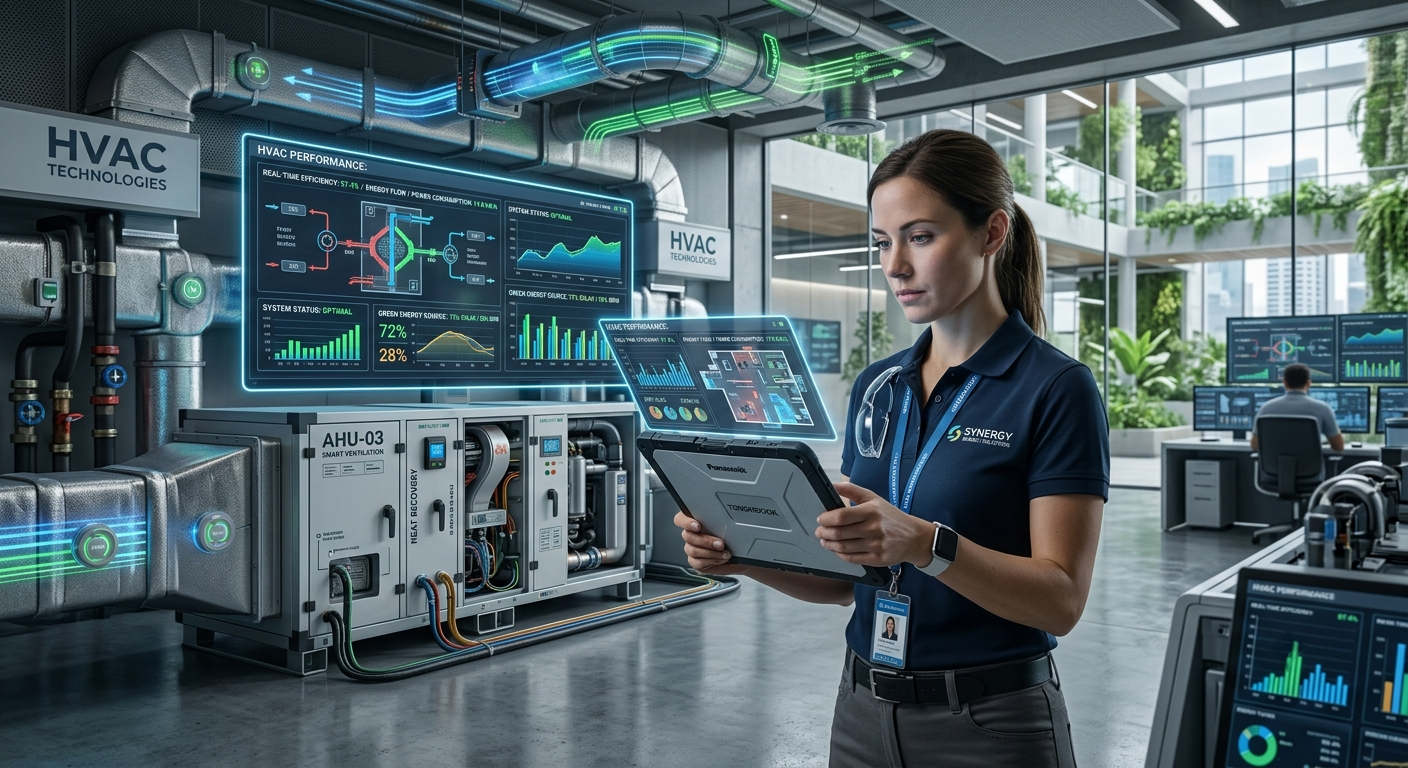
Energy Efficiency & Consultancy Insights: Optimizing HVAC Performance for Sustainable Buildings
Energy efficiency has become a critical priority in modern building management due to rising energy costs, environmental regulations, and increasing demand for sustainable infrastructure. HVAC systems are among the largest energy consumers in residential, commercial, and industrial buildings, often accounting for a significant portion of total electricity usage.
Improving HVAC efficiency is not only beneficial for reducing operational costs but also essential for extending system lifespan, improving indoor comfort, and minimizing environmental impact.
This blog explores key energy efficiency strategies and HVAC consultancy insights that help optimize system performance in a practical and cost-effective manner.
1. Importance of Energy-Efficient HVAC Systems
An inefficient HVAC system can lead to:
- Excessive energy consumption
- Higher utility bills
- Uneven temperature distribution
- Frequent system breakdowns
- Increased environmental impact
On the other hand, optimized HVAC systems deliver:
- Lower operational costs
- Stable indoor climate control
- Reduced carbon footprint
- Improved equipment lifespan
Energy efficiency is therefore not an optional upgrade—it is a long-term operational necessity.
2. Proper System Sizing and Load Calculation
One of the most critical factors in HVAC efficiency is correct system sizing.
Why it matters:
- Oversized systems cycle frequently and waste energy
- Undersized systems struggle to maintain comfort levels
Key considerations:
- Building size and layout
- Insulation quality
- Number of occupants
- Heat load from equipment and lighting
Accurate cooling load calculation ensures optimal system selection and long-term efficiency.
3. Regular Preventive Maintenance
Preventive maintenance plays a major role in maintaining energy efficiency.
Key maintenance activities include:
- Cleaning air filters and coils
- Checking refrigerant levels
- Inspecting duct leakage
- Lubricating moving parts
- Testing system controls
Dirty or poorly maintained systems can consume significantly more energy while delivering reduced performance.
4. Smart Thermostat and Control Systems
Modern HVAC systems benefit greatly from intelligent control solutions.
Advantages of smart controls:
- Automated temperature regulation
- Time-based scheduling
- Remote system monitoring
- Energy consumption optimization
Smart thermostats help reduce unnecessary energy usage by adjusting system operation based on real-time requirements.
5. Airflow Optimization and Duct Efficiency
Efficient airflow distribution is essential for HVAC performance.
Common inefficiencies include:
- Leaking ducts
- Blocked vents
- Poor insulation
- Unbalanced airflow systems
Improvements:
- Sealing duct leaks
- Balancing airflow across zones
- Ensuring unobstructed ventilation paths
Proper airflow optimization reduces system strain and improves comfort levels.
6. Energy-Efficient Equipment Upgrades
Older HVAC systems are often less efficient compared to modern units.
Upgrade considerations:
- High SEER-rated air conditioning systems
- Variable speed compressors
- Energy-efficient chillers
- Eco-friendly refrigerants
Upgrading outdated systems can significantly reduce long-term energy costs.
7. Indoor Air Quality (IAQ) Management
Energy efficiency is closely linked with indoor air quality management.
Key practices:
- Proper ventilation design
- Use of high-quality filters
- Humidity control systems
- Regular air quality assessments
Balanced IAQ systems ensure comfort without excessive energy consumption.
8. HVAC Consultancy Role in Energy Optimization
Professional HVAC consultancy plays a key role in improving system performance.
Consultancy services include:
- System performance analysis
- Energy audit and reporting
- Equipment selection guidance
- Retrofit planning
- Sustainability recommendations
Consultants help identify inefficiencies that are often not visible during routine maintenance.
9. Long-Term Cost Benefits of Energy Optimization
Investing in energy efficiency delivers long-term financial advantages:
- Reduced electricity bills
- Lower maintenance costs
- Extended equipment lifespan
- Reduced emergency repairs
- Improved property value
Energy-efficient HVAC systems are a strategic investment rather than an operational expense.
Conclusion
Energy efficiency in HVAC systems is essential for modern building operations. Through proper system design, preventive maintenance, smart controls, and professional consultancy, significant improvements in performance and cost savings can be achieved.
A well-optimized HVAC system ensures sustainable operation, improved comfort, and reduced environmental impact—making it a key component of responsible facility management.