

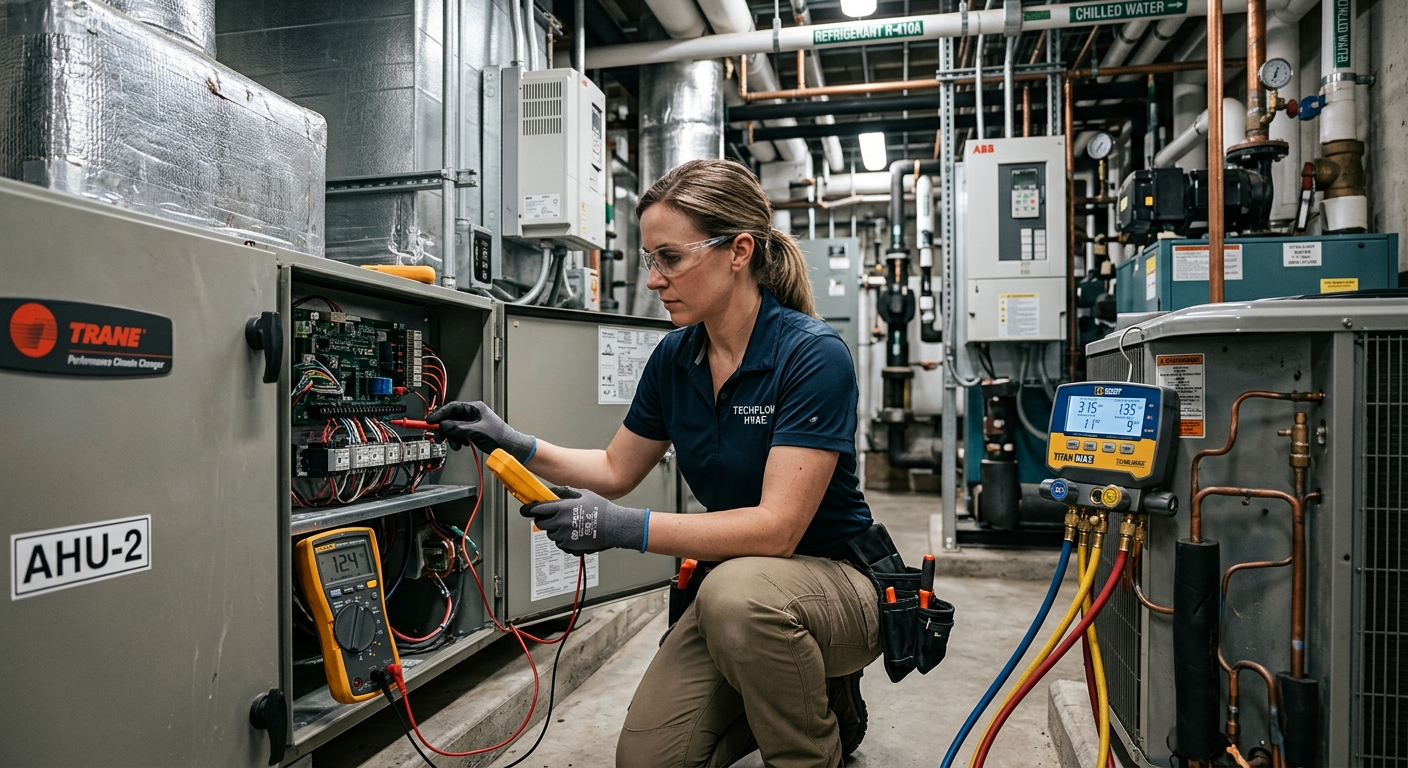
HVAC System Guides & Troubleshooting: Complete Diagnostic Guide for HVAC Problems
HVAC systems are designed to deliver consistent indoor comfort by regulating temperature, airflow, and humidity. However, like any complex mechanical and electrical system, HVAC units can develop operational issues over time due to wear, lack of maintenance, environmental factors, or system overload.
Understanding common HVAC problems and their root causes helps property owners, facility managers, and technicians identify issues early, reduce downtime, and prevent costly repairs.
This guide provides a comprehensive overview of HVAC system troubleshooting, covering the most frequent problems, diagnostic methods, and practical solutions.
1. HVAC System Not Cooling or Heating Properly
One of the most common complaints is inadequate cooling or heating performance.
Possible Causes:
- Dirty air filters restricting airflow
- Low refrigerant levels or refrigerant leakage
- Faulty thermostat settings or calibration issues
- Compressor malfunction
- Blocked or dirty condenser coils
Troubleshooting Steps:
- Check thermostat settings and mode (cool/heat)
- Inspect and replace air filters if dirty
- Ensure outdoor unit is clean and free from debris
- Look for ice formation on coils (indicates refrigerant issue)
If the issue persists, professional inspection is required to check refrigerant pressure and compressor health.
2. Weak Airflow from Vents
Weak airflow reduces system efficiency and indoor comfort.
Possible Causes:
- Clogged air filters
- Blocked air ducts or vents
- Faulty blower motor
- Leaking ductwork
- Dirty evaporator coil
Troubleshooting Steps:
- Replace or clean air filters
- Ensure all vents are open and unobstructed
- Check for dust buildup in vents
- Inspect duct insulation and sealing (if accessible)
Poor airflow often indicates system imbalance that requires technical adjustment.
3. HVAC System Making Unusual Noises
Unusual sounds are early warning signs of mechanical issues.
Common Noise Types & Causes:
- Banging or clanking: loose internal components
- Squealing: worn belts or motor issues
- Hissing: refrigerant leak
- Rattling: loose panels or debris in system
Troubleshooting Steps:
- Turn off the system immediately if noise is severe
- Inspect visible external components
- Avoid operating system under abnormal noise conditions
Technical inspection is required to prevent further damage.
4. HVAC System Not Turning On
System failure to start can be caused by electrical or control issues.
Possible Causes:
- Tripped circuit breaker
- Faulty thermostat
- Power supply interruption
- Blown fuse
- Control board malfunction
Troubleshooting Steps:
- Check main power supply and circuit breakers
- Replace thermostat batteries if applicable
- Reset system once safely
- Inspect external power connections
If no response, electrical diagnostics should be performed by a technician.
5. Water Leakage from Indoor Unit
Water leakage is a common HVAC issue that should not be ignored.
Possible Causes:
- Blocked condensate drain line
- Frozen evaporator coil
- Improper installation or leveling
- Damaged drain pan
Troubleshooting Steps:
- Check and clean drain pipe
- Turn off system if ice formation is visible
- Ensure proper unit installation angle
- Remove dust buildup around drainage system
Persistent leakage requires professional servicing.
6. HVAC System Cycling On and Off Frequently
This is known as short cycling and reduces system efficiency.
Possible Causes:
- Oversized HVAC system
- Thermostat malfunction
- Dirty coils or filters
- Refrigerant imbalance
Troubleshooting Steps:
- Clean filters and coils
- Check thermostat location (avoid heat sources)
- Ensure proper airflow balance
Short cycling increases energy consumption and system wear.
7. Bad Odor from HVAC System
Unpleasant smells indicate hygiene or mechanical issues.
Possible Causes:
- Mold or bacteria in ductwork
- Dirty air filters
- Moisture buildup in drainage system
- Burnt electrical components
Troubleshooting Steps:
- Replace filters immediately
- Clean evaporator coils and drain lines
- Inspect system for moisture accumulation
Regular cleaning prevents odor issues and improves air quality.
Conclusion
HVAC troubleshooting is essential for maintaining system reliability, efficiency, and safety. While basic issues like filter replacement and airflow checks can be handled by users, most technical problems require professional diagnosis to prevent further damage.
Early identification of HVAC issues ensures reduced repair costs, improved energy efficiency, and longer equipment lifespan.
For accurate diagnostics, system repair, and professional HVAC support, regular inspection by qualified technicians is highly recommended.